

Goal-Setting Diary
A goal-setting diary is a powerful tool to transform vague ambitions into clear, actionable steps. It allows you to prioritize tasks, track progress, and celebrate milestones. By writing down goals regularly, you build accountability and discipline while also staying motivated. Over time, this diary becomes not just a planner but a trusted companion guiding you toward personal and professional success.
Core Purpose of a Goal-Setting Diary
The purpose of a goal-setting diary is to provide structure and clarity for achieving ambitions. It turns big dreams into practical milestones by encouraging a habit of reflection, planning, and adjustment. Whether used for personal aspirations, academic achievements, or professional growth, the diary ensures consistency and progress.
SMART Goals Framework
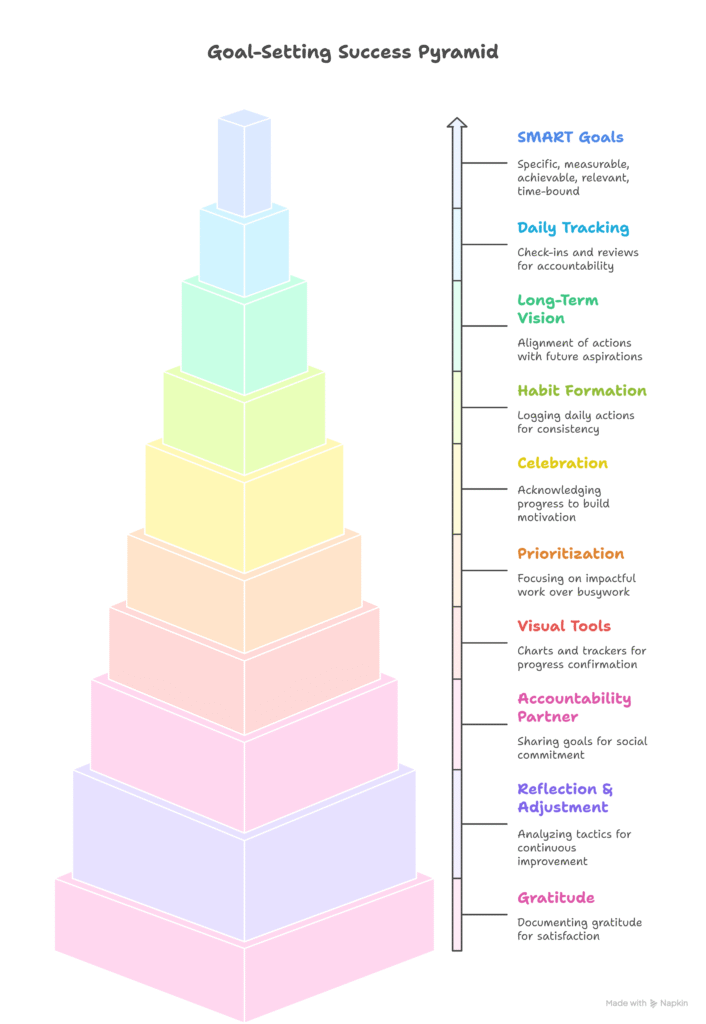
- The SMART framework—Specific, Measurable, Achievable, Relevant, and Time-bound—is at the core of most goal-setting diaries. It prevents vague intentions and ensures that every goal is actionable and measurable. This structured approach helps maintain focus and allows you to evaluate progress more effectively.
Daily & Weekly Tracking
- A goal-setting diary often includes sections for daily check-ins and weekly reviews. This structure encourages accountability, allowing you to reflect on wins and identify what needs improvement. Over time, this habit creates consistency and builds momentum toward achieving larger goals.
Long-Term Vision
- In addition to short-term tasks, goal-setting diaries emphasize a broader vision. This alignment of everyday actions with future aspirations ensures that small efforts compound into meaningful achievements. By keeping the bigger picture in mind, motivation and clarity remain strong.
Habit Formation
- Many goal-setting diaries include habit trackers. By logging daily actions—like exercise, reading, or skill-building—you reinforce consistency. These habits often become the foundation for long-term success, making achievement a natural outcome of routine.
Celebrating Milestones
- A good diary encourages celebration of progress, both big and small. By acknowledging completed tasks or achieved goals, you build motivation and reduce burnout. Celebration keeps the journey rewarding rather than overwhelming.
Prioritization Methods
- Prioritization techniques like the Eisenhower matrix or ABC lists help you focus on what really matters. These methods prevent busywork from taking priority over impactful work. Integrating prioritization into your diary keeps your energy directed toward meaningful outcomes.
Visual Progress Tools
- Charts, timelines, or milestone trackers provide visual confirmation of progress. Seeing growth mapped out makes achievements feel tangible and fuels continued effort. Visual tools are motivating and clarify the path ahead.
Accountability Partner
- Sharing your diary goals with a mentor or accountability partner increases follow-through. External accountability creates social commitment, which often boosts consistency. The diary becomes a collaborative tool for encouragement and feedback.
Reflection & Adjustment
- Regular reflection helps you understand why certain tactics worked or failed. Adjusting your approach based on honest analysis prevents wasted effort and accelerates learning. This iterative mindset strengthens your long-term strategy.
Celebration & Gratitude
- Documenting what you’re grateful for alongside milestones deepens satisfaction with progress. Celebration and gratitude help create a positive feedback loop that sustains motivation through challenges.
How to Start a Goal-Setting Diary?
Begin by clarifying the areas of life you want to improve—career, health, learning, or relationships. Write down your top three long-term goals, then break each into monthly and weekly milestones. Commit to short daily actions and weekly reflection sessions to track progress and recalibrate as needed.
Define Your Priorities
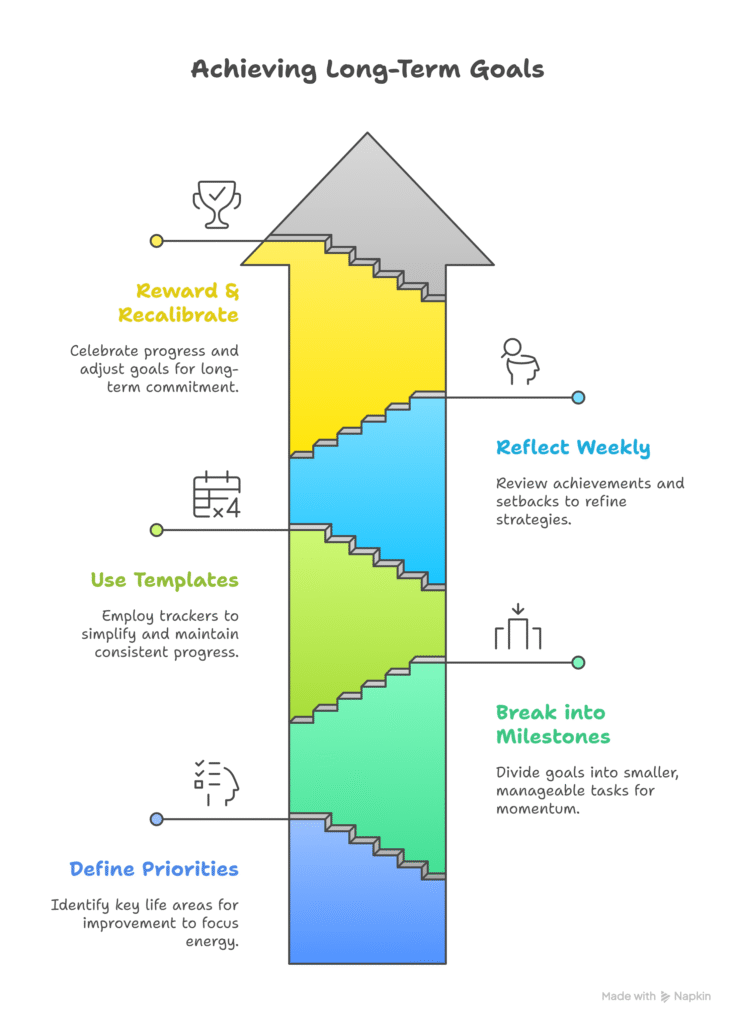
- Start by listing the most important areas of your life where you want measurable growth. This clarity prevents you from spreading effort across too many fronts and helps focus your energy.
Break Goals into Milestones
- Divide larger goals into smaller, time-bound milestones that are easier to achieve. Milestones create momentum and reduce overwhelm by turning targets into manageable tasks.
Use Templates & Trackers
- Adopt simple templates—weekly checklists, progress bars, or habit trackers—to make consistent tracking effortless. Templates reduce friction and keep you focused on execution.
Reflect Weekly
- Set aside time each week to review achievements, setbacks, and lessons learned. Reflection helps you spot patterns fast and refine strategies for the coming week.
Reward & Recalibrate
- Celebrate milestones to stay motivated, then recalibrate goals that aren’t serving you. Rewarding progress and adjusting plans ensures long-term commitment and growth.
Conclusion
A goal-setting diary combines intention with action—making dreams measurable and achievable. It fosters discipline, clarity, and resilience by turning abstract ambitions into concrete steps. With consistent use, it becomes a powerful engine for growth, helping you navigate setbacks and celebrate wins. Ultimately, this diary is a personal blueprint for sustained achievement and meaningful progress.