

Productivity Journal
A productivity journal is a structured tool to maximize efficiency, clarify priorities, and convert daily effort into meaningful progress. By combining planning with reflection, individuals learn what routines work best and eliminate wasted time. Over time, a productivity journal builds consistent habits that support deep focus and sustainable achievement.
Aim of Productivity Journals
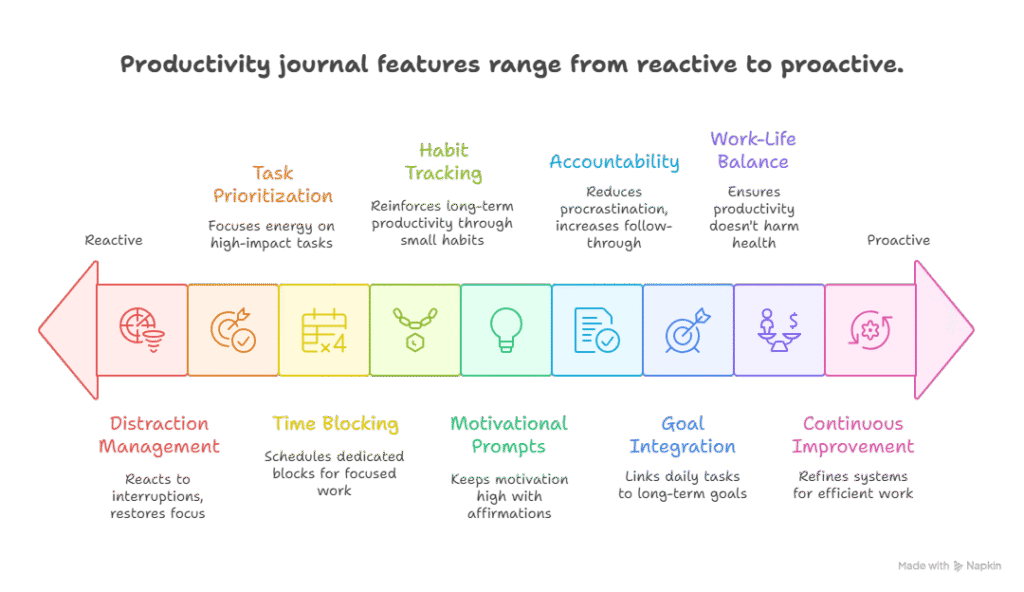
Productivity journals streamline tasks, prioritize important work, and encourage reflection. They help users design productive days intentionally rather than reactively.
Task Prioritization
- Entries emphasize identifying top-priority tasks for the day to ensure energy is focused on high-impact work.
Time Blocking
- Scheduling dedicated blocks for focused work reduces multitasking and increases deep work productivity.
Reflection & Review
- End-of-day or weekly reflections help identify efficiencies and bottlenecks.
Habit Tracking
- Tracking small daily habits like planning, reading, or exercise reinforces long-term productivity.
Distraction Management
- Noting common distractions helps create strategies to avoid them and protect focus time.
Motivational Prompts
- Prompts and affirmations keep motivation high and provide quick resets during tough days.
Work-Life Balance
- Including wellness checks ensures productivity doesn’t come at the cost of mental or physical health.
Accountability
- Documenting commitments helps reduce procrastination and increases follow-through.
Goal Integration
- Linking daily tasks to long-term goals keeps daily work meaningful.
Continuous Improvement
- Reviewing patterns over time refines systems to make work more efficient and effective.
How to Start a Productivity Journal?
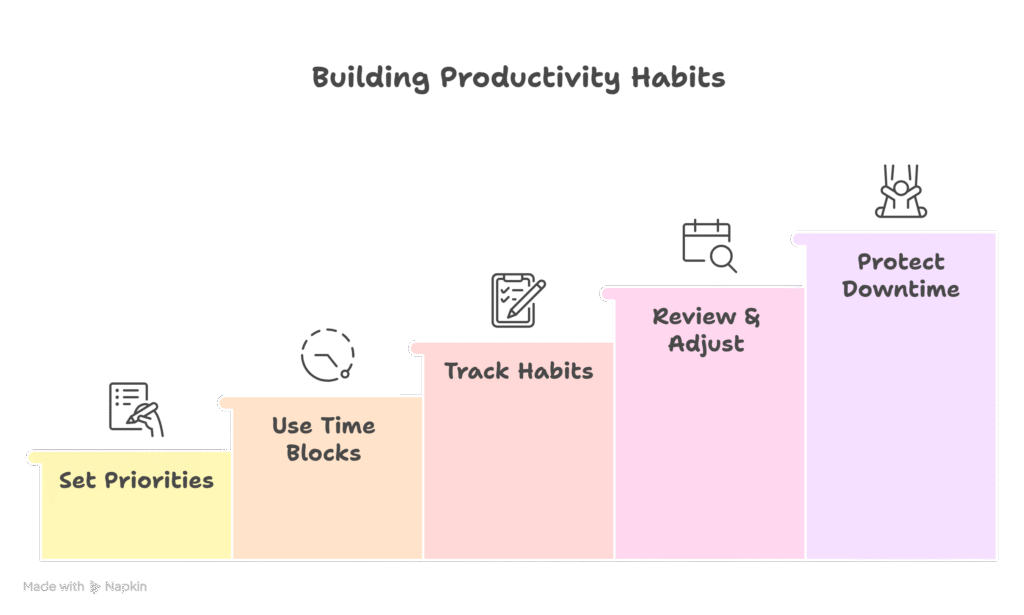
Begin by setting clear daily priorities and blocking time for focused work. Start small with one or two time blocks and a simple end-of-day reflection. Gradually build habits that support deep work and reduce context switching.
Set Top 3 Tasks
- Choose the three most important tasks each day to ensure high-impact work gets done.
Use Time Blocks
- Allocate uninterrupted time for focused work and shield it from meetings or distractions.
Track Habits
- Log habits that support productivity like planning, exercise, or focused reading.
Review & Adjust
- Reflect on what worked each day and adjust your plan for better outcomes.
Protect Downtime
- Schedule rest and recovery to maintain long-term focus and prevent burnout.
Conclusion
A productivity journal is a practical companion for anyone aiming to do their best work with less friction. Through clear priorities, time-blocking, and reflection, you build systems that support consistent performance. Over time, the journal reveals which strategies yield the best results and helps you cultivate sustainable habits for long-term productivity.