
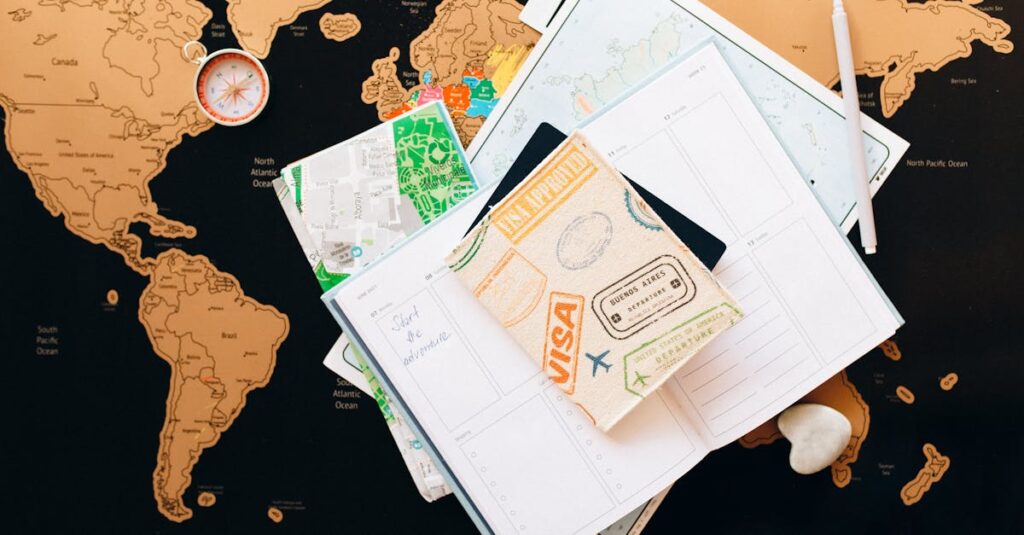
Travel Journal
A travel journal captures journeys, experiences, and discoveries while traveling. It preserves sensory details, practical tips, and emotional reflections that are often lost over time. A well-kept travel journal becomes both a memory bank and a practical guide for future trips.
Purpose of a Travel Journal
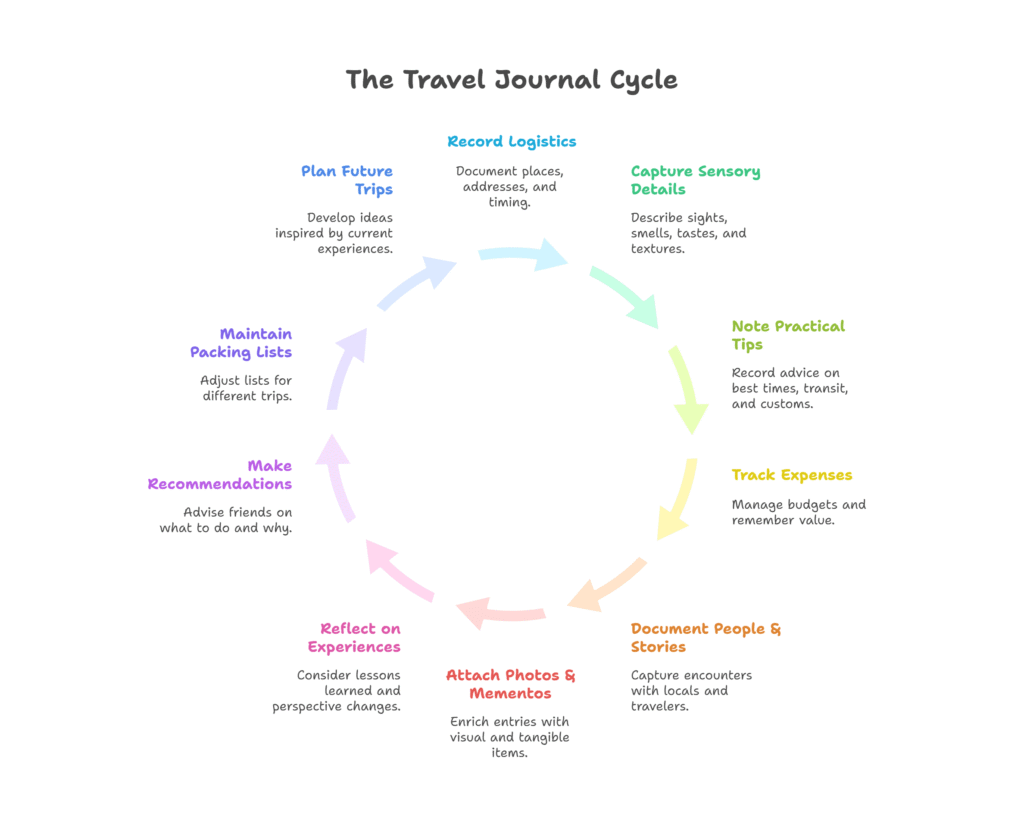
Travel journals record logistics, memorable moments, and cultural impressions to enrich the travel experience and preserve memories.
Itinerary Notes
- Log places visited, addresses, and timing to create a clear travel record.
Sensory Details
- Write about sights, smells, tastes, and textures to relive places vividly.
Practical Tips
- Record tips like best times to visit, transit tricks, and local customs.
Expense Tracking
- Note costs to manage budgets and remember the value for future planning.
People & Stories
- Capture encounters with locals or fellow travelers as memorable anecdotes.
Photos & Mementos
- Attach photos, tickets, or sketches to enrich entries.
Reflection
- Reflect on what the trip taught you or how it changed your perspective.
Recommendations
- Note what you’d recommend to friends and why.
Packing Lists
- Maintain packing lists and adjustments for different trips.
Future Planning
- Record ideas for future trips inspired by current experiences.
How to Start a Travel Journal?
Begin by noting the date, location, and a quick snapshot of your first impressions each day. Keep entries short but include one sensory detail and one practical tip to make entries rich and useful.
Date & Location
- Start each entry with time and place to anchor memories.
Capture a Moment
- Record a single vivid moment—an encounter, a meal, or a view—that defines the day.
Save Mementos
- Collect tickets, labels, or small keepsakes to attach to entries.
List Tips
- Note logistical tips like transport options and best times to visit attractions.
Reflect
- End with a short reflection about what the day taught you.
Conclusion
A travel journal bridges the gap between experience and memory, preserving details that fade quickly. It becomes a personal atlas of places, tastes, and people, useful both for nostalgia and future planning.