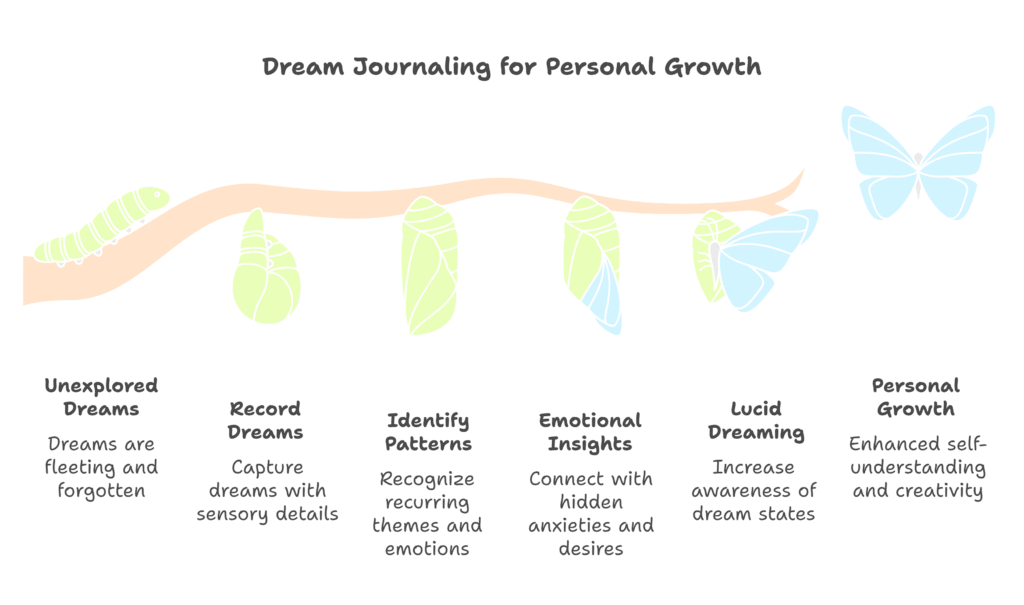
A dream journal is a dedicated space to record dreams immediately after waking. By documenting dreams in detail, individuals enhance recall, spot recurring themes, and explore the subconscious mind. Such journals not only serve as a tool for personal reflection but also aid in creative inspiration. Many artists, writers, and innovators turn to their dream journals for unique ideas. Over time, this practice nurtures mindfulness, self-awareness, and deeper understanding of one’s thoughts and emotions.
Key Traits of a Dream Journal
The defining features of a dream journal revolve around clarity, detail, and consistency. It emphasizes capturing dreams as vividly as possible, even fragments, before they fade. Each entry strengthens the ability to notice hidden meanings and recurring imagery, which can be invaluable in personal growth and creativity.
Dedicated Purpose
Unlike standard journals, dream journals are fully devoted to dreams, visions, or subconscious experiences. They often contain prompts or sections for dream titles, emotions felt during the dream, and any waking reflections. This focus encourages commitment to exploring inner thoughts without distraction.
Structured Entries
Entries often follow a structure—date, title, dream sequence, emotions, and interpretations. This consistency makes it easier to analyze trends over weeks or months. Some dream journals also include rating systems for clarity or intensity of dreams.
Sensory Detail
Effective dream journaling emphasizes sensory aspects—sounds, colors, textures, or smells experienced in the dream. These sensory notes provide a richer picture and often unlock forgotten fragments. The more detailed the entries, the stronger the dream recall becomes over time.
Recurring Patterns
By journaling consistently, recurring themes such as flying, falling, or meeting certain people can be identified. Recognizing these patterns may highlight unresolved concerns or subconscious desires. It can also support lucid dreaming practices by training the mind to notice familiar cues.
Creative Inspiration
Many creative individuals use dream journals as inspiration for art, writing, or problem-solving. Dreams often bypass logical filters, offering raw and original ideas. Recording them ensures no spark of imagination is lost.
Emotional Insights
Dreams frequently reflect emotions that may not be acknowledged while awake. Tracking these emotional cues helps individuals connect with hidden anxieties, joys, or desires. This deepens emotional intelligence and supports better mental health.
Lucid Dreaming Practice
A dream journal is an essential tool for those practicing lucid dreaming. By reinforcing memory of dream details, the mind becomes more aware of dream states. This increases the likelihood of realizing one is dreaming, thereby achieving lucidity.
Mindfulness Connection
Documenting dreams nurtures mindfulness by encouraging presence and reflection. It bridges the subconscious and conscious worlds, creating a habit of paying attention to inner experiences. This mindfulness often spills over into daily life, improving focus and awareness.
Therapeutic Reflection
For individuals undergoing therapy, dream journals provide valuable material for exploration. Dreams may reveal unresolved trauma, hidden fears, or unspoken desires. Therapists often encourage clients to bring dream entries for discussion.
Long-Term Growth
Over months or years, a dream journal becomes a powerful record of personal growth. It shows how dreams evolve as life circumstances change, highlighting shifts in emotions and perspectives. This historical view fosters self-understanding and growth over time.
How to Start a Dream Journal?
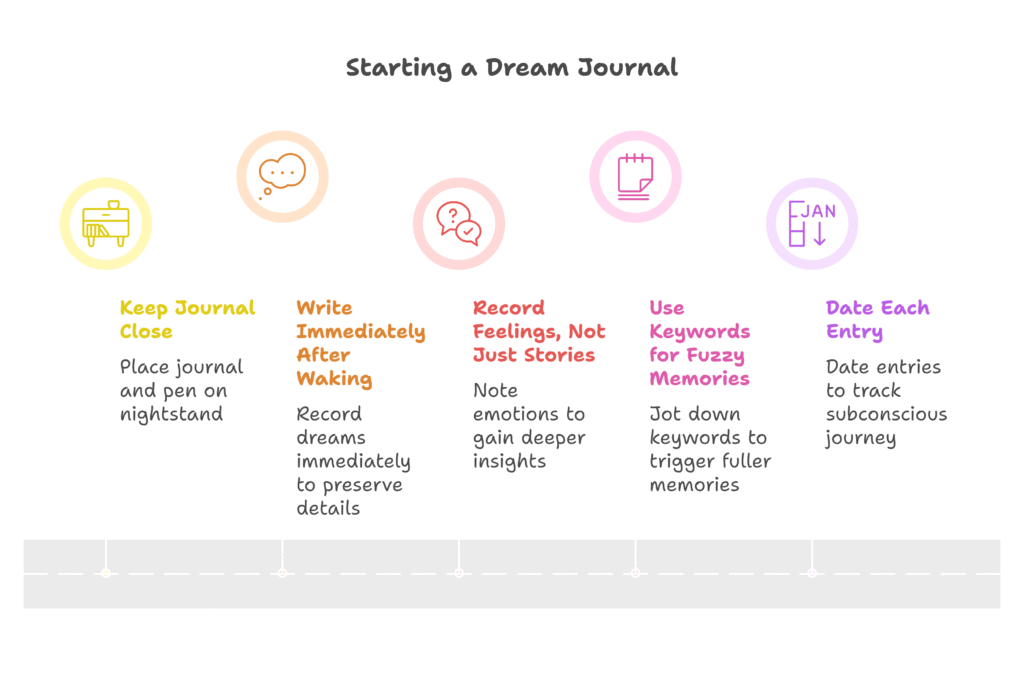
Starting a dream journal begins with creating a consistent habit of recording your dreams immediately upon waking. Keep a dedicated notebook or digital journal next to your bed so you can jot down even the smallest fragments. Over time, these small notes add up, making your recall sharper and helping you identify meaningful patterns. This process gradually deepens self-awareness, strengthens creativity, and makes you more connected with your subconscious mind.
Keep Your Journal Close
Place your journal and pen on your nightstand before going to sleep. This simple act removes barriers and makes recording easier when you wake. The more accessible your journal is, the more likely you’ll stick with the habit. Accessibility is key to building consistency.
Write Immediately After Waking
Dreams fade quickly, often within minutes of waking. Writing them down immediately preserves detail and authenticity. Even if the memory feels fuzzy, capturing fragments ensures your subconscious messages are not lost. Over time, this quick capture will greatly improve your recall.
Record Feelings, Not Just Stories
Dreams often carry emotional weight more than logical sequences. Recording how you felt in the dream—fearful, happy, confused—can provide deeper insights than just describing the events. These emotions help uncover underlying concerns or inspirations in your waking life.
Use Keywords for Fuzzy Memories
Some mornings you may remember only a word, symbol, or image. Jotting down these quick notes often triggers a fuller memory later in the day. Even a single keyword can unlock connections when you review your entries later. This technique ensures that nothing valuable slips away.
Date Each Entry
Dating every entry builds a timeline of your subconscious journey. Reviewing these dated records after weeks or months reveals recurring themes and cycles. This can be especially useful in spotting personal growth or recurring challenges. The date also adds context, showing how your inner world evolves with life events.
Conclusion
A dream journal is more than a collection of nighttime stories—it is a window into the subconscious mind. By recording consistently, you create a detailed record of thoughts, feelings, and symbols that would otherwise vanish. Over time, this practice enhances creativity, sparks inspiration for storytelling or problem-solving, and uncovers personal patterns that influence daily life. It can also serve as a therapeutic outlet, giving form to emotions that might be hard to express consciously. Ultimately, keeping a dream journal transforms fleeting nightly experiences into a meaningful tool for self-discovery and growth.