

Food Diary
A food diary tracks meals, portion sizes, and reactions to different foods to create awareness around eating habits. It helps identify patterns, intolerances, or moments of emotional eating. A clear record of food intake supports healthier choices and nutritional goals.
Purpose of a Food Diary
A food diary helps you understand how food affects energy, mood, and digestion. It supports mindful eating and provides data for nutrition planning or medical guidance.
Meal Logging
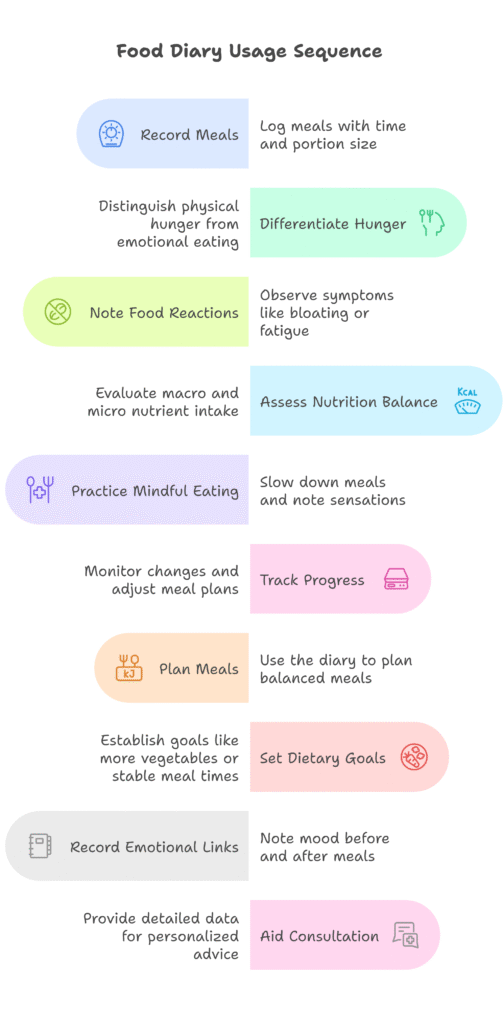
- Record meals with time and portion size to spot patterns and triggers.
Hunger vs Habit
- Differentiate physical hunger from habitual or emotional eating to improve choices.
Food Reactions
- Note symptoms like bloating or fatigue to identify intolerances.
Nutrition Balance
- Assess macro and micro nutrient balance to support health goals.
Mindful Eating
- Slow down meals and note sensations to improve digestion and satisfaction.
Progress Tracking
- Monitor changes and adjust meal plans based on real data.
Meal Planning
- Use the diary to plan balanced meals and reduce impulsive eating.
Dietary Goals
- Set goals like more vegetables or stable meal times and track adherence.
Emotional Links
- Record mood before and after meals to spot emotional eating cycles.
Consultation Aid
- A detailed food diary helps dietitians or doctors provide personalized advice.
How to Start a Food Diary?
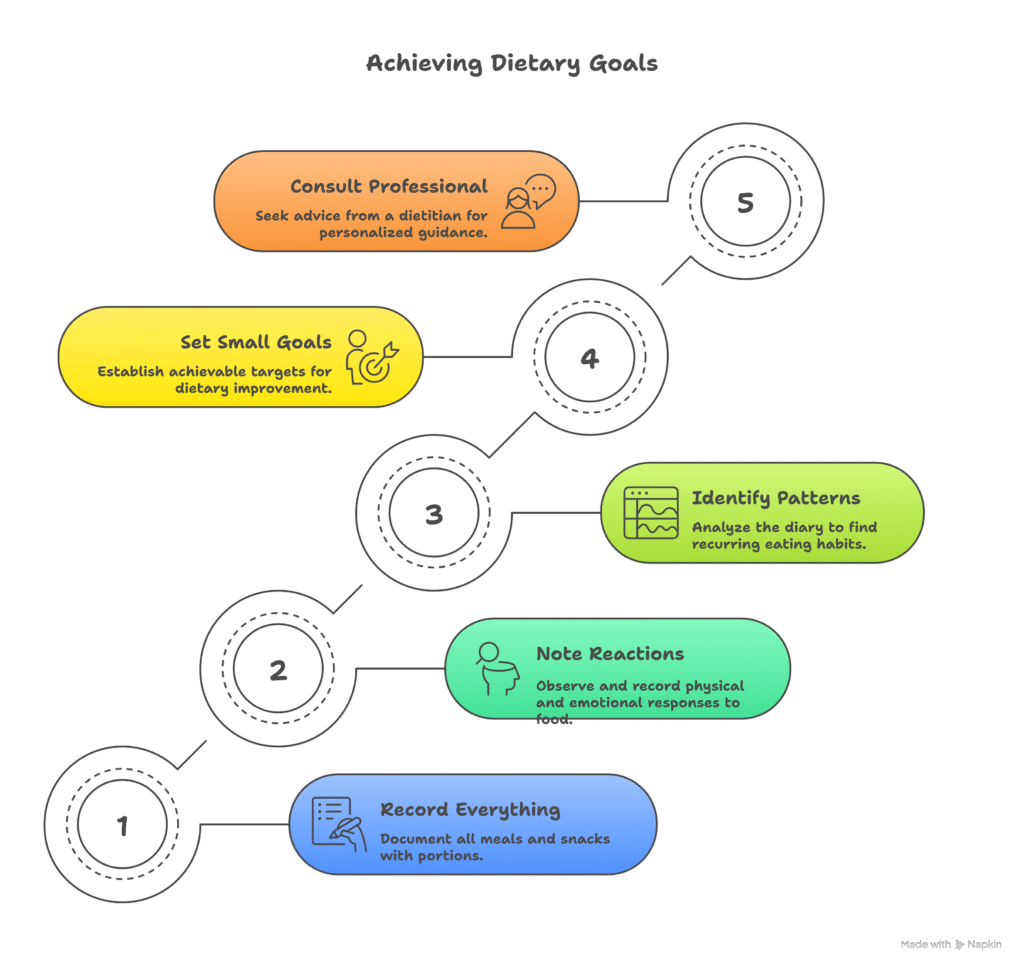
Start by recording everything you eat for a week without judgment. Note portions, time, and any symptoms. After a week, review for patterns and set small goals like adding vegetables or regular meal times.
Record Everything
- Document meals, snacks, and drinks with approximate portions to get accurate data.
Note Reactions
- Jot down digestion, energy levels, or mood after eating to spot problematic foods.
Identify Patterns
- Look for times you overeat or skip meals and adjust your routine accordingly.
Set Small Goals
- Start with simple targets like drinking more water or adding a salad daily.
Consult a Professional
- Share your diary with a dietitian if you suspect intolerances or need tailored advice.
Conclusion
A food diary turns eating into actionable insight—helping you make better choices through data. It exposes patterns, supports nutrition goals, and provides a clear record for professional consultations. With consistent tracking, food becomes a tool for health rather than a mystery to navigate.