

Mood Tracker
A mood tracker diary helps individuals observe and reflect on their emotional states over time. By recording moods daily, it becomes easier to identify triggers, patterns, and influences on mental health. This diary serves as both a self-care practice and a valuable tool for therapy. Over time, it helps cultivate emotional awareness, resilience, and better coping strategies.
Purpose of Mood Tracking
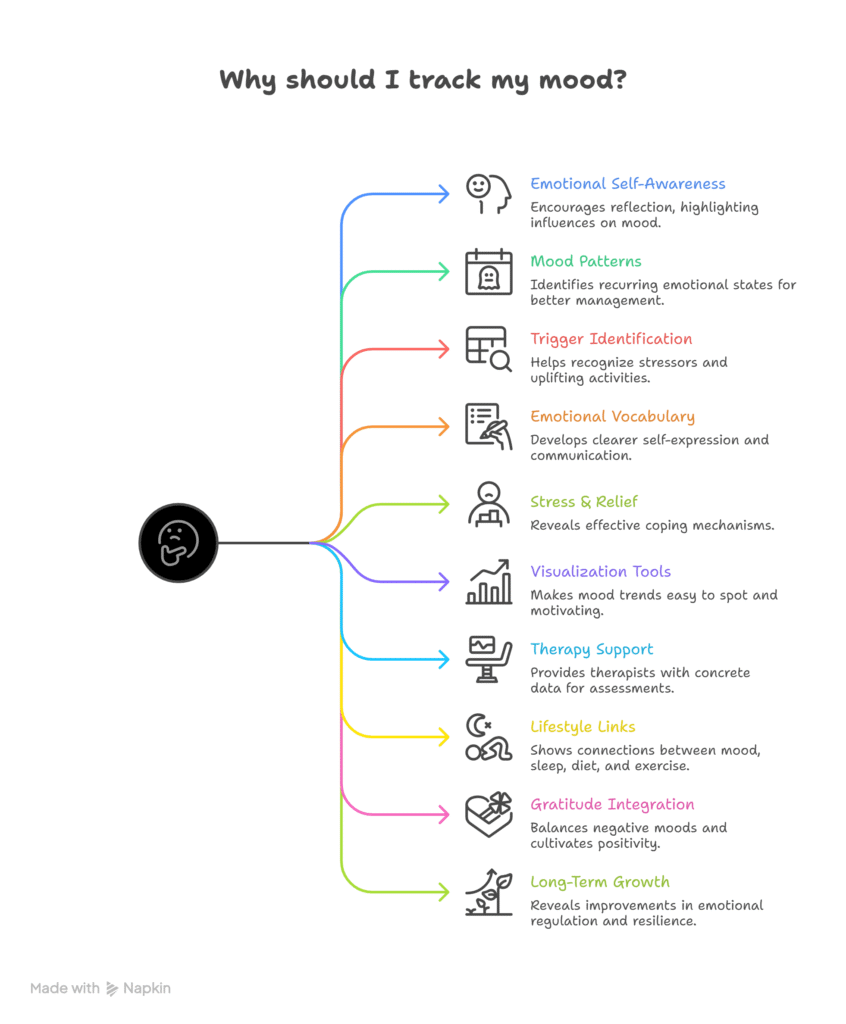
Mood trackers increase emotional self-awareness by encouraging consistent reflection. They highlight how lifestyle, habits, or relationships influence mood and wellbeing. This awareness supports better decisions and targeted self-care.
Daily Check-ins
- Most mood diaries provide space for quick daily ratings or short notes. This helps capture emotions in the moment, offering accuracy and honesty. Small but consistent entries reveal trends that might otherwise be overlooked.
Mood Patterns
- Reviewing entries makes it easier to see recurring emotional states. For example, certain days or events may trigger specific moods. These insights provide clarity for managing mental health.
Trigger Identification
- By noting what preceded a mood, individuals can identify stressors or uplifting activities. Recognizing triggers helps in making proactive changes and building healthier routines.
Emotional Vocabulary
- Writing about feelings develops a richer emotional vocabulary, enabling clearer self-expression and better communication with others.
Stress & Relief Correlation
- Tracking coping mechanisms alongside moods reveals what reduces stress effectively. This supports the development of healthier coping strategies.
Visualization Tools
- Color-coded calendars or charts make mood trends easy to spot and motivating to review.
Therapy Support
- Mood logs provide therapists with concrete data, improving the accuracy of assessments and interventions.
Sleep & Lifestyle Links
- Mood trackers often reveal connections between mood, sleep quality, diet, and exercise, encouraging holistic adjustments.
Gratitude Integration
- Adding a gratitude line helps balance negative moods and cultivates a more positive outlook.
Long-Term Emotional Growth
- Over months, mood tracking reveals growth in emotional regulation, resilience, and wellbeing.
How to Start a Mood Tracker
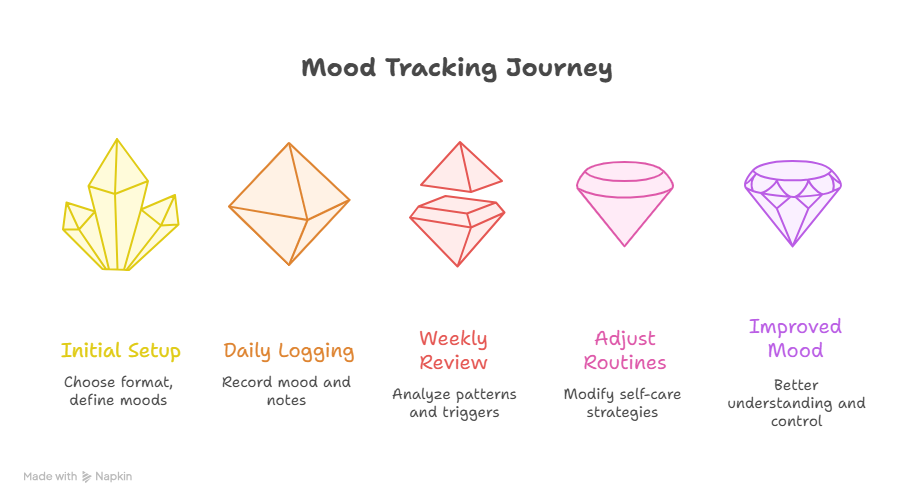
Start by choosing a simple format—app, printable, or notebook—and decide which emotions you want to track. Keep entries short and consistent, using a scale or color system to capture daily mood quickly. Over time, analyze weekly patterns and adjust self-care routines accordingly.
Choose a Format
- Pick an app, printable tracker, or a page in your journal. The easier it is to use, the more consistent you’ll be.
Define Mood Categories
- Decide on a set of moods or a numerical scale so entries stay consistent and comparable.
Set a Daily Reminder
- Pick a consistent time to log your mood—morning or evening—to build the habit.
Pair with Notes
- Add a short note about triggers or highlights to give context to mood ratings.
Review Weekly
- Look for patterns each week and adjust strategies—like sleep or exercise—to support better moods.
Conclusion
A mood tracker empowers you to take charge of your emotional wellbeing through consistent awareness. It translates ephemeral feelings into useful data that can inform better habits, therapy, or lifestyle changes. With commitment, a mood diary becomes a trusted tool for growing emotional resilience and improving overall mental health.