

Relationship Journal
A relationship journal helps individuals reflect on interpersonal dynamics, communication patterns, and emotional needs. It supports growth in friendships, romantic partnerships, and family ties by promoting honesty, empathy, and intentional change.
Purpose of a Relationship Journal
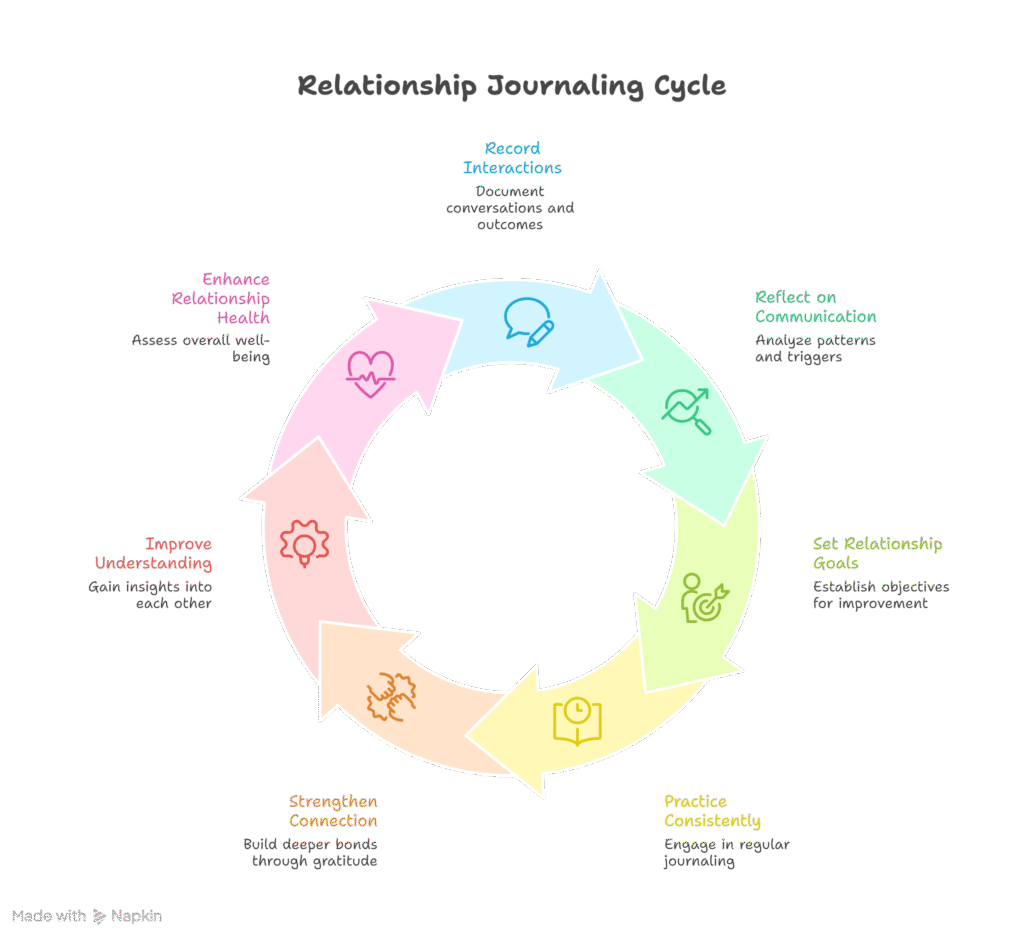
The journal focuses on tracking interactions, reflecting on communication patterns, and setting relationship goals. It encourages better understanding and healthier relationships through consistent practice.
Communication Logs
- Record important conversations, reactions, and outcomes to analyze communication patterns.
Emotional Check-ins
- Note your emotional state before and after interactions to spot triggers and growth.
Gratitude Notes
- Document appreciation for small acts to strengthen connection.
Conflict Reflection
- Analyze conflicts to identify root causes and healthier responses.
Goal Setting
- Set relationship goals like better listening or quality time and track progress.
Boundaries
- Record and refine boundaries that protect wellbeing and mutual respect.
Shared Memories
- Log meaningful moments to build a shared narrative and deepen bonds.
Therapy Aid
- Bring journal entries to couples therapy or counseling to support healing and growth.
Appreciation Practices
- Include regular prompts for expressing gratitude and acknowledgment.
Relationship Health
- Track patterns over time to assess the overall health of the relationship.
How to Start a Relationship Journal?
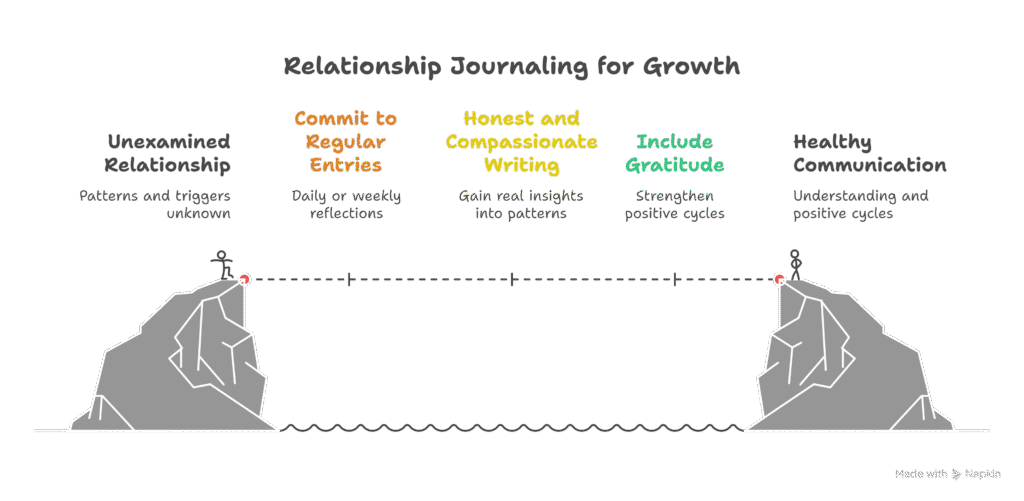
Start by committing to short daily or weekly entries reflecting on important interactions. Note what went well, where misunderstandings occurred, and any gratitude or concerns that arose.
Set a Rhythm
- Decide whether to write daily or weekly to suit your schedule and relationship needs.
Be Honest
- Write with compassion but honesty to gain real insights into patterns.
Include Gratitude
- Note small things you appreciate to strengthen positive cycles.
Reflect on Conflicts
- Use the journal to understand triggers and plan better responses in the future.
Share When Ready
- Consider sharing parts of the journal with your partner as a communication aid.
Conclusion
A relationship journal cultivates deeper understanding and intentional connection. Through regular reflection, gratitude, and honest assessment, it can repair patterns and reinforce loving behaviors. Used thoughtfully, it’s a tool for growth, empathy, and stronger bonds.