

Storytell Diary
A storytell diary captures experiences as narratives, focusing on emotion, detail, and the lessons they contain. This format turns everyday moments into meaningful stories and encourages creative self-expression. It’s an ideal practice for those who want to preserve memories with depth and craft a personal archive of life lessons.
Purpose of Storytelling in Diaries
Storytell diaries encourage crafting events into narratives, emphasizing context, characters, and lessons. They enhance memory, creativity, and emotional processing through richer description.
Narrative Focus
- Write entries as scenes with a beginning, middle, and end to make memories vivid and engaging.
Emotional Depth
- Describe feelings and internal reactions to add authenticity and insight.
Character Sketches
- Portray people involved as characters to understand relationships and roles.
Writing Styles
- Experiment with voice—dialogue, imagery, or metaphor—to make entries more artistic.
Lessons & Reflection
- End stories with the lesson learned or a question for future reflection.
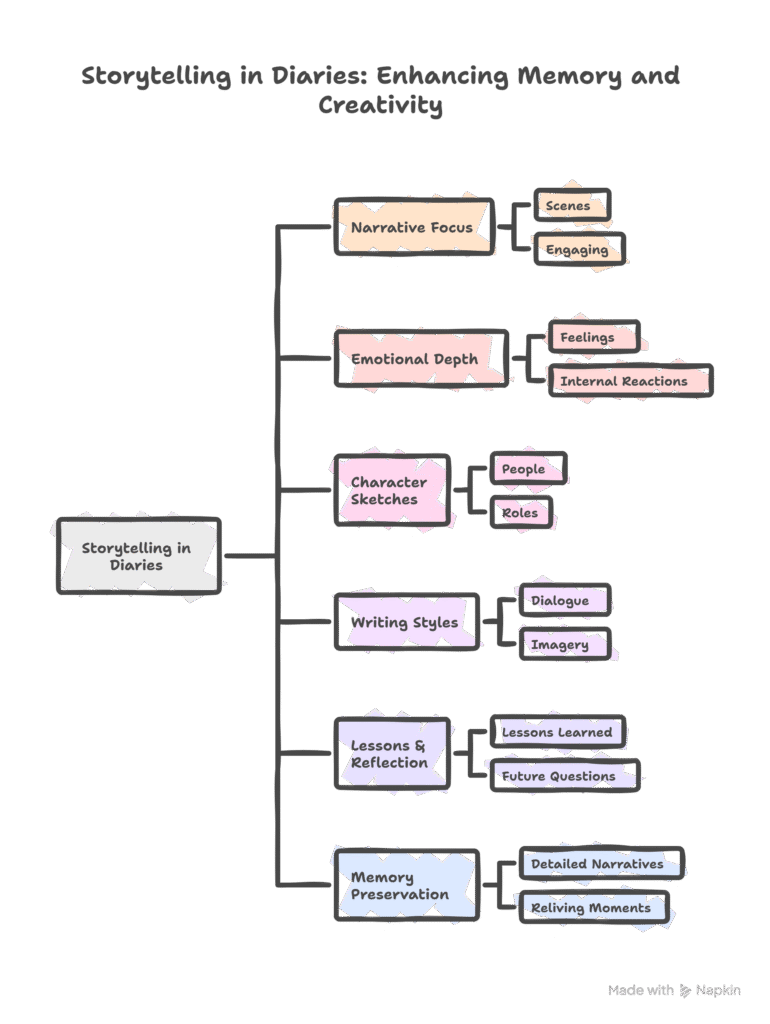
Memory Preservation
- Detailed narratives help you relive moments vividly when revisited later.
Creative Prompts
- Use prompts to jumpstart writing: ‘Describe a scent that defined today.’
Sharing & Editing
- Some stories can be refined into essays or personal memoir pieces for sharing.
Therapeutic Expression
- Storytelling helps process emotions and gain perspective on life events.
Legacy Building
- Over time, a storytell diary becomes a legacy of your voice and experiences.
How to Start a Storytell Diary?
Begin by choosing a memorable event and writing it as a scene. Focus on sensory detail and the emotions involved. Commit to one short story a week to build momentum and create a rich personal archive.
Pick a Moment
- Choose a single event or interaction to focus on and describe it with sensory detail.
Set the Scene
- Describe time, place, characters, and the mood to ground the reader in the moment.
Focus on Feeling
- Note your internal reactions and emotions to add depth to the narrative.
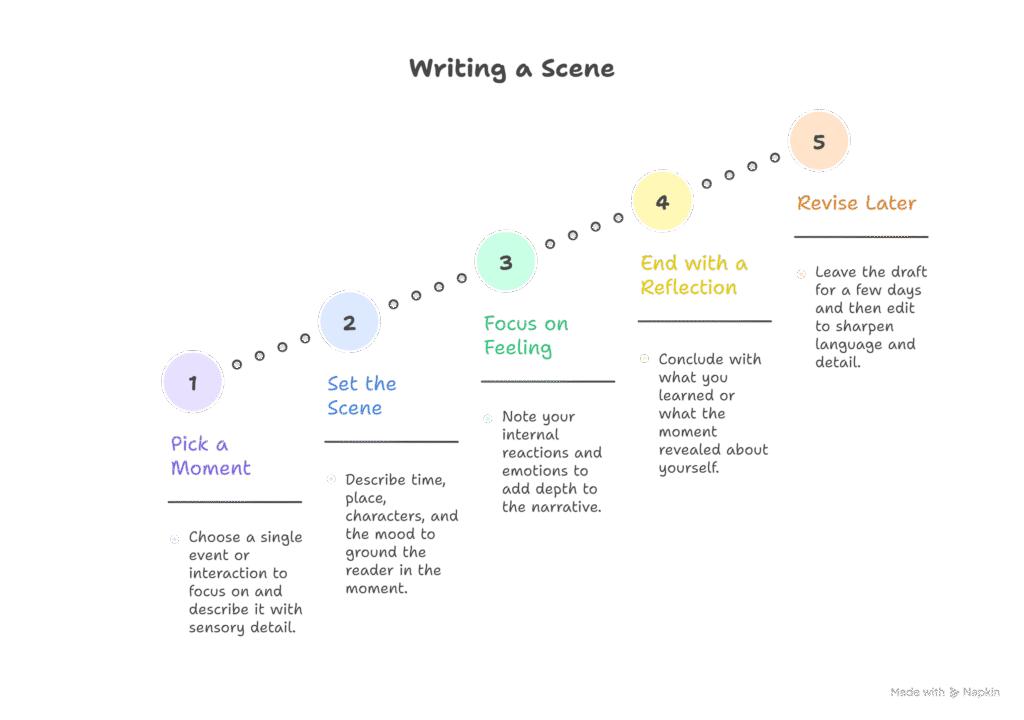
End with a Reflection
- Conclude with what you learned or what the moment revealed about yourself.
Revise Later
- Leave the draft for a few days and then edit to sharpen language and detail.
Conclusion
A storytell diary transforms routine experiences into crafted narratives that reveal personal truths. Through deliberate practice, you enhance memory, deepen self-understanding, and develop a unique voice. Over time, your diary becomes a meaningful collection of lessons, emotions, and stories that map your growth.